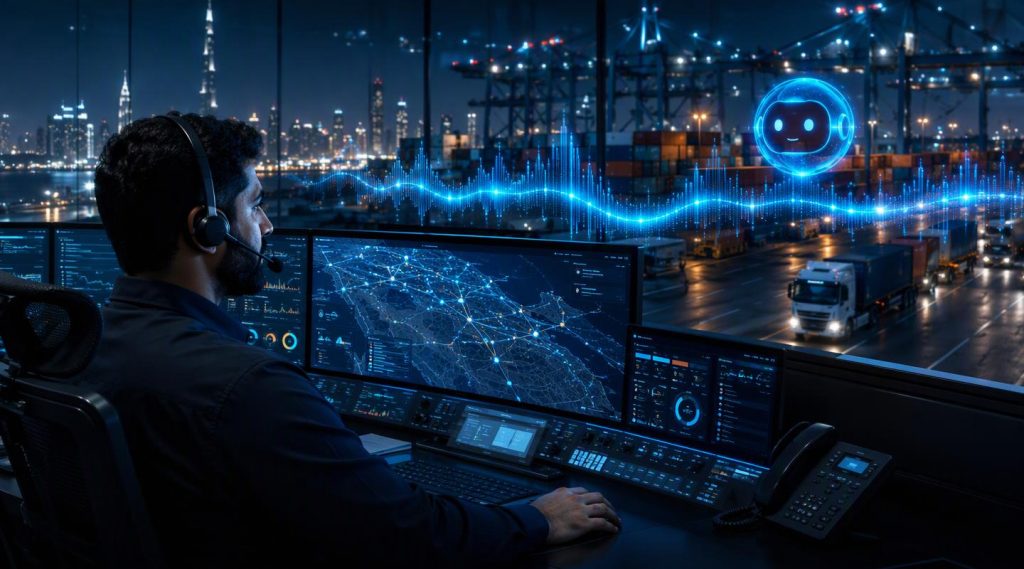
What is Agentic AI for Logistics?
Agentic AI for logistics is less about automating tasks and more about orchestrating complex operations with precision. It refers to AI systems designed to autonomously manage logistics workflows, including staffing, inventory, and delivery schedules. Unlike traditional AI, which often requires human intervention, agentic AI operates independently, making decisions based on real-time data and predefined objectives. This capability is particularly valuable in logistics, where seasonal fluctuations demand rapid adjustments to workforce and resource allocation.
Want this for your business? Speak to the Eva team or message us on WhatsApp.
How does Agentic AI optimise seasonal staffing?
Seasonal staffing in logistics is a challenge due to unpredictable demand spikes and labour shortages. Agentic AI addresses this by analysing historical data, current trends, and predictive models to forecast staffing needs. It can autonomously schedule shifts, allocate resources, and even recommend hiring strategies to support operational efficiency during peak seasons. For example, logistics companies in Dubai often face increased demand during Ramadan and holiday seasons. Agentic AI can predict these surges and prepare staffing plans that minimise downtime and maximise throughput. Additionally, operators in Dubai South frequently encounter operational demands tied to trade volumes, which agentic AI can help streamline by dynamically adjusting workforce allocation.
Where do logistics companies benefit most from Agentic AI?
Logistics companies in the UAE commonly see significant benefits from deploying agentic AI in the following areas:
- Staffing, Predicting workforce requirements during peak seasons.
- Delivery Scheduling, Optimising routes and timings for faster deliveries.
- Inventory Management, Supporting stock levels align with demand forecasts.
- Customer Communication, Automating updates and notifications for clients.
- Performance Analytics, Monitoring KPIs to identify areas for improvement.
Comparison: Agentic AI vs Traditional AI in Logistics
Understanding the differences between agentic AI and traditional AI is crucial for logistics companies aiming to optimise operations.
| Feature | Agentic AI | Traditional AI |
|---|---|---|
| Decision-Making | Autonomous | Human-Assisted |
| Adaptability | Real-Time Adjustments | Predefined Rules |
| Scalability | Highly Scalable | Limited by Human Input |
| Integration | Seamless with IoT | Requires Manual Configuration |
| Cost Efficiency | Long-Term Savings | Higher Operational Costs |
Industry deployments in logistics hubs like Dubai South often highlight the scalability of agentic AI as a key advantage over traditional AI. For instance, while traditional AI may require manual configuration to adapt to new operational demands, agentic AI autonomously adjusts to changes such as seasonal spikes or unexpected delays.
Why voice matters in logistics operations
Voice-first technology is transforming logistics operations by enabling hands-free communication and real-time updates. For example, warehouse managers in Al Quoz can use voice commands to check inventory levels or update delivery schedules without interrupting their workflow. This integration of voice technology with agentic AI supports faster decision-making and reduces errors. Companies in the sector commonly see improved operational efficiency and enhanced employee productivity when adopting voice-first solutions. Additionally, voice-first systems allow drivers to receive route updates or report delivery issues without needing to stop their vehicles, supporting smoother operations during peak periods.
Deploying Agentic AI for logistics in the UAE
Deploying agentic AI in the UAE logistics sector involves several steps, including integration with existing systems, training staff, and monitoring performance. Eva.Agentic simplifies this process by autonomously managing tasks like CRM updates and workforce scheduling. Logistics hubs in Jebel Ali and Dubai South have already begun leveraging agentic AI to streamline operations. Industry deployments typically report faster ROI when focusing on high-impact areas like delivery scheduling and inventory management. For instance, during Dubai’s peak trade seasons, Eva.Agentic can dynamically adjust staffing and inventory levels to align with fluctuating demand, supporting seamless operations. For further insights, explore AI for logistics.
Numbers and observations from industry deployments
Operators in the UAE logistics sector frequently observe measurable improvements in efficiency and cost savings after implementing agentic AI. For instance, companies using agentic AI for logistics have reported reduced delivery times and optimised staffing during peak seasons. Logistics hubs in Dubai South and Jebel Ali Free Zone commonly see enhanced inventory management and streamlined delivery schedules, particularly during high-demand periods like Ramadan or holiday seasons. Industry deployments typically report that agentic AI reduces operational overheads by automating repetitive tasks and enabling real-time adaptability.
It’s worth reading business automation services Dubai alongside this, since the two connect directly.
For a deeper dive, AI agency in Dubai for business automation unpacks how this plays out in day-to-day operations.
Bottom Line
Choosing the Agentic AI UAE solution for logistics is essential for optimising seasonal staffing and operations. By leveraging autonomous decision-making and real-time adaptability, logistics companies can support efficiency and scalability during peak periods.
Selecting the best agentic AI for UAE logistics is a strategic move to address the challenges of seasonal staffing and fluctuating demand. With the ability to autonomously manage operations and adapt in real time, these AI solutions empower logistics firms to maintain seamless workflows during peak periods. This helps to make sure that businesses operating in hubs like Jebel Ali Free Zone or Dubai South can scale efficiently without compromising service quality.
Industry deployments typically report significant improvements in resource allocation and operational agility when leveraging agentic AI. By integrating these advanced systems, companies can reduce overhead costs associated with temporary staffing while enhancing overall productivity. In a competitive market like the UAE, where logistics underpin sectors from e-commerce to trade, adopting such technology is not just an advantage but a necessity for sustained growth and customer satisfaction.
FAQ
What is agentic AI?
Agentic AI refers to autonomous systems capable of making decisions without human intervention, particularly in complex workflows like logistics. For example, it can independently adjust delivery schedules based on real-time traffic data.
How does agentic AI help with seasonal staffing?
It forecasts demand, dynamically schedules shifts, and allocates resources to meet seasonal needs, even during peak periods like Ramadan. For instance, it can recommend hiring temporary staff in advance based on predictive analytics.
Can agentic AI integrate with existing logistics systems?
Yes, it seamlessly integrates with IoT and ERP systems, enabling real-time adaptability and enhanced functionality. For example, it can connect to warehouse management systems to optimise inventory tracking.
Why is voice-first technology important in logistics?
It enables hands-free operations, improves task completion times, and reduces errors, particularly in fast-paced environments like warehouses. Voice commands can also be used to update delivery statuses instantly.
Sources

Hemant Agrawal is a subject matter expert in agentic AI and business automation at Eva. He writes on how organisations in the UAE apply autonomous AI agents to everyday commercial operations, from customer engagement to back office workflows.